Empowering equitable, rational policymaking through living evidence.

The Cambridge Traceable AI pipeline.

What we're building

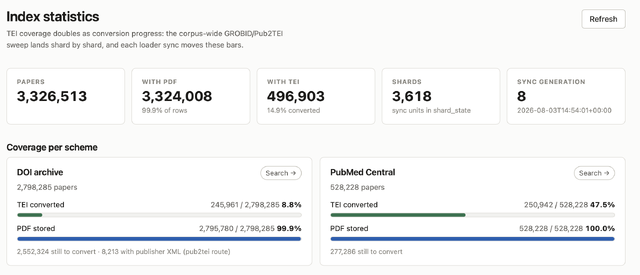
Systematic reviews start going out of date the moment they are published. Evidence TAP replaces them with living evidence databases that continuously ingest, screen, appraise and extract the research literature. Every claim stays traceable to its source.

The pipeline runs on local, self-hosted models and adapts to the decision at hand: rapid synthesis for urgent questions, expert verification where the stakes are higher. In our flagship study it reached 97% recall against a large-scale manual review.

It began in Cambridge's Conservation Evidence collaboration and is now expanding into education, with health and climate to follow.

  • Conservation
  • Education
  • more to follow

How the pipeline works →

Latest news

Co-authors of the responsible AI principles paper outside the Oxford Martin School

Principles for responsible AI in conservation

Sam Reynolds led a preprint with conservation-AI researchers worldwide. It has been submitted to Conservation Science and Practice.

samreynolds.org →
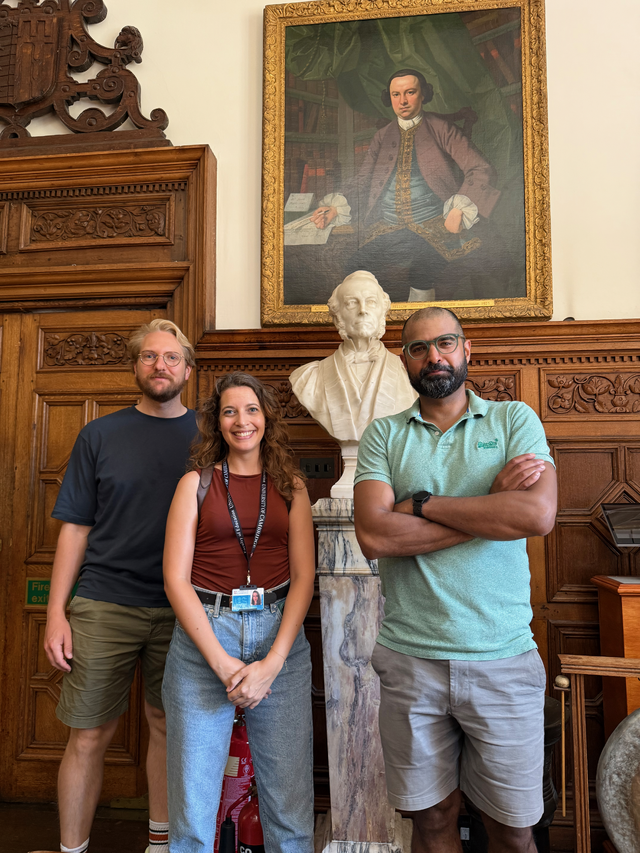
  1. The Evidence TAP team meeting at the Centre for the Study of Existential Risk Evidence TAP takes shape
  2. Signboard for ECCB 2026 outside the congress venue in Leiden Plenary panel at ECCB 2026
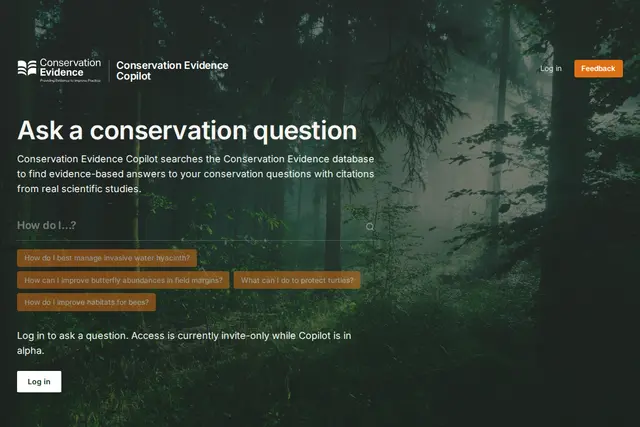
  3. Demonstrating the Evidence TAP pipeline at the Houses of Parliament The Conservation Copilot demoed in Parliament
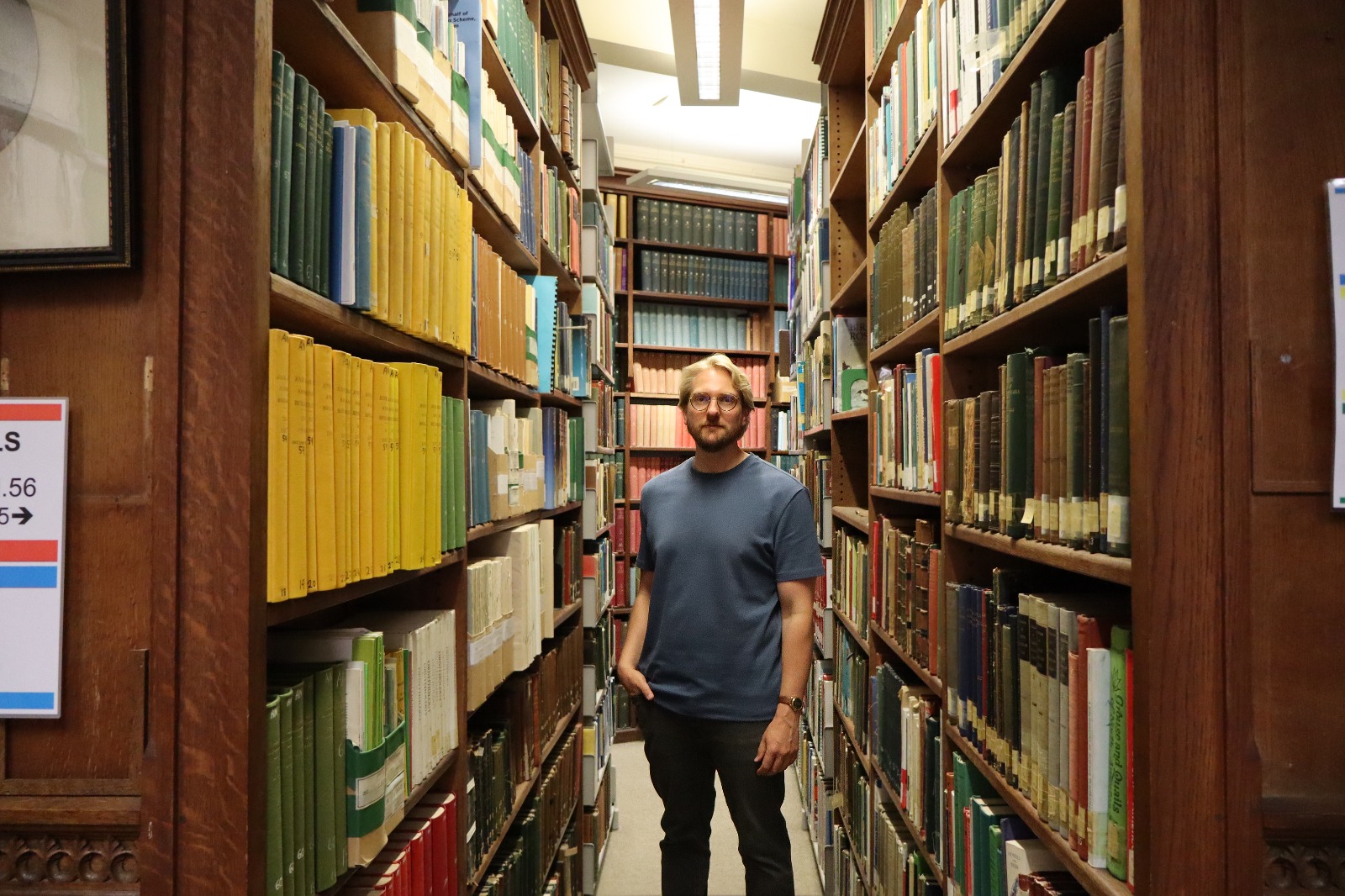
  4. The team meeting around a table at the Faculty of Education in Cambridge Evidence TAP kicks off

Next 7 Sep 2026: AI and rapid evidence reviews at the DEFRA data festival

All news →

Papers

  1. AI-assisted Living Evidence Databases for Conservation Science

    Cambridge Open Engage, 2025

    The flagship pipeline: a self-hosted, end-to-end system that ingests, screens, and extracts structured data from the literature. It achieves 97% recall against a large manual review.

  2. Will AI speed up literature reviews or derail them entirely?

    Nature, 2025

    AI-generated “poison” papers threaten evidence synthesis. Traceable AI pipelines can form part of the defence.

  3. Careful design of Large Language Model pipelines enables expert-level retrieval

    PLOS ONE, 2025

    Well-designed hybrid retrieval pipelines reach expert-level performance on conservation evidence questions. Off-the-shelf LLMs fall short.

All papers →

The team

Computer scientists, conservation scientists and education researchers work side by side at the University of Cambridge. They share a single living evidence engine and apply it wherever policy needs to know what works.

Computer Science

  • Anil Madhavapeddy Department of Computer Science & Technology
  • Sadiq Jaffer Department of Computer Science & Technology
  • Eleanor Toye Scott Department of Computer Science & Technology

Conservation

  • Lynn Dicks Department of Zoology
  • William Sutherland Department of Zoology
  • Sam Reynolds Department of Zoology
  • William Morgan Department of Zoology
  • Alec Christie Imperial College London

Education

  • Jenny Gibson Faculty of Education
  • Mélanie Gréaux Faculty of Education

In association with Rob Doubleday, Nicky Buckley and Alexandru Marcoci, across the Centre for Science and Policy and the Centre for the Study of Existential Risk.

With collaborators beyond Cambridge, plus the students, interns and alumni who have shaped the pipeline. Meet the full team →