Papers
-
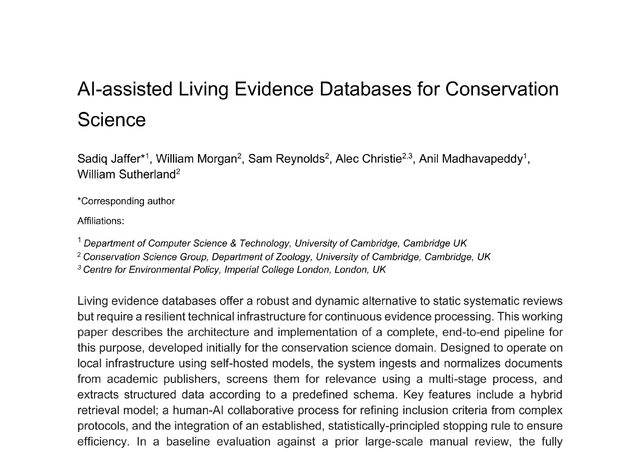
AI-assisted Living Evidence Databases for Conservation Science
The flagship pipeline: a self-hosted, end-to-end system that ingests, screens, and extracts structured data from the literature. It achieves 97% recall against a large manual review.
-
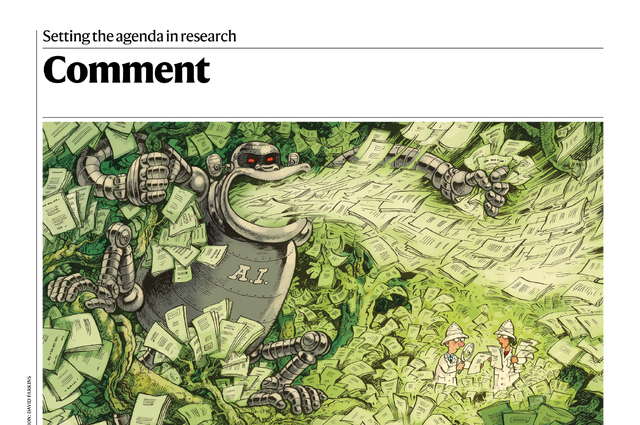
Will AI speed up literature reviews or derail them entirely?
AI-generated “poison” papers threaten evidence synthesis. Traceable AI pipelines can form part of the defence.
-
Careful design of Large Language Model pipelines enables expert-level retrieval
Well-designed hybrid retrieval pipelines reach expert-level performance on conservation evidence questions. Off-the-shelf LLMs fall short.
-
Conservation changed but not divided
AI can unite rather than divide conservation if it is built around human expertise, openness, and capacity-building.
-
The potential for AI to revolutionize conservation: a horizon scan
A horizon scan of where AI could most transform conservation practice, covering both opportunities and risks.